A standard 7-foot barbell can take up more room than you expect, especially if your home gym is tucked into a spare room, garage, or other tight space.
A shorter bar can make things easier, but there’s a catch: not every short bar is actually designed to work with a rack.
The best rackable short barbell for home gym use needs to balance overall length, rack compatibility, sleeve space, and weight capacity.
In this guide, we’ll compare five compact options and look at where each one makes the most sense.
Best Rackable Short Barbell For Home Gym: Comparison Table
Product
Best For
Overall Length
Rackable?
Loadable Sleeve
Weight
Capacity
RITFIT Olympic Barbell
Best overall compact option
4–6 ft
Depends on model
Varies
Varies
350–500 lbs
CAP Olympic Barbell
Compact 5-ft option
5 ft
Yes*
Varies
25 lbs
500 lbs
LIONSCOOL Olympic Barbell
Very small spaces
4–6 ft
Depends on model
7.1″ on 4-ft model
20 lbs on 4-ft
500 lbs
Titan Olympic Technique Barbell
6-ft rack training
72″
Yes
9.75″
15 kg / 33 lbs
500 lbs
Yaheetech Curl Bar Set
Accessory training
Curl bar
More details below
N/A
Set
Set-dependent
1. RITFIT Olympic Barbell – Best Overall Compact Option

If you want to save space without giving up the feel of a traditional Olympic bar, the RITFIT is a good place to start. The different length options also make it easier to match the bar to your room and rack.
- Length: 4, 5, or 6 feet
- Shaft diameter: 25 mm on the 4-foot version
- Capacity: 350–500 lbs, depending on the model
- Sleeves: 2-inch Olympic sleeves
- Finish: Oxide
- Bearings: Needle bearings
- Warranty: Lifetime against bending
What stands out with the RITFIT is how much easier a shorter bar is to manage in a cramped space. You don’t have a lot of extra bar sticking out past the rack, which can make a noticeable difference when your gym is squeezed into a small room.
I’d look at the 6-foot version if you want to use the bar with a rack. The 4-foot model is much more geared toward curls and other accessory work, so it’s not the one I’d choose for squats or benching from a rack.
The needle-bearing sleeves are another nice touch. They’re designed to keep the sleeves turning smoothly, while the shorter overall length makes the bar easier to move and store.
What We Like
- Several length options to choose from
- Much easier to handle than a standard 7-foot bar
- Olympic-size sleeves
- Smooth needle-bearing sleeve design
- Lifetime bending warranty
What Could Be Better
- The specifications change between the different length options.
- The 4-foot version isn’t a true substitute for a rackable bar.
- You’ll want to measure your rack before choosing the 6-foot model.
The RITFIT makes the most sense if space is your main concern, but you still want a proper Olympic-style bar. For rack work, I’d stick with the 6-foot version and check its rackable dimensions first. If you’re mainly doing curls, rows, and other accessory exercises, the shorter versions become much more practical.
Also See: Best Folding Exercise Bikes for Small Spaces
2. CAP Olympic Barbell – Best 5-Foot Option

This one makes sense if you want a shorter bar that’s easier to manage in a small home gym, especially if you’re newer to barbell training.
- Length: 5 feet
- Weight: 25 lbs
- Capacity: 500 lbs
- Shaft: 100,000 PSI tensile strength
- Sleeves: 2-inch Olympic sleeves
- Finish: Hard E-Coat
- Bushings: Bronze
The 5-foot length is the main reason to consider this CAP bar. Compared with a standard 7-foot bar, there’s simply less bar extending beyond your rack, which can make a tight setup feel less cramped.
It’s also lighter than a traditional 45-pound Olympic bar, so it’s easier to move around and a little less intimidating if you’re still getting comfortable with barbell training. CAP says it’s designed for exercises including squats, presses, rows, and full-body strength work.
The bronze bushings should also give the sleeves a smoother rotation, while the 2-inch sleeves let you use standard Olympic plates. Just make sure the exact 5-foot model you buy has the rackable dimensions your rack requires.
What We Like
- Compact 5-foot length
- Relatively light 25-pound starting weight
- 500-pound stated capacity
- Works with standard Olympic plates
- Hard E-Coat finish for home-gym use
What Could Be Better
- Less loading space than a full-size bar
- The shorter length means rack compatibility needs to be checked carefully
- Not the best choice if you regularly need to load very heavy weights
The CAP is a good option if you want to cut down on bar length without going all the way down to a specialty accessory bar. It’s particularly appealing for a smaller home gym where a standard 7-foot bar feels unnecessarily long.
3. LIONSCOOL Olympic Barbell – Best for Very Small Spaces

This is the one I’d look at if saving space matters more to you than having a bar that works with a power rack.
- Length: 4 ft, 4.9 ft, or 6 ft
- 4-ft model weight: 20 lbs
- Shaft diameter: 28 mm
- 4-ft shaft length: 31.5″
- Loadable sleeve: 7.1″
- Capacity: 500 lbs
- Tensile strength: 87,000 PSI
- Sleeves: 2″ Olympic
- Finish: Black E-Coat
The 4-foot version is seriously compact. At just 47.2 inches long, it takes up very little room compared with a standard Olympic bar, which can be useful when your workout area doubles as a living space or sits in a particularly tight corner.
The tradeoff is important, though. This isn’t really a rack bar in the 4-foot configuration. LIONSCOOL positions it for exercises such as curls, rows, presses, deadlifts, and hip thrusts that don’t require a power cage.
So if you’re looking for a short barbell for small spaces and mostly train without a rack, that’s where this bar makes the most sense. If squats and rack-based bench pressing are priorities, I’d look at one of the longer options instead.
What We Like
- Very compact 4-foot option
- 28 mm shaft
- 500-pound stated capacity
- Smooth sleeve rotation
- Lifetime warranty against bending
What Could Be Better
- The 4-foot version isn’t suitable for typical rack use
- 7.1-inch sleeves don’t leave as much loading room
- The shorter versions are more specialized than a standard Olympic bar
The LIONSCOOL is a good example of why shorter doesn’t automatically mean rackable. For curls, rows, presses, and other floor-based work, the 4-foot version can be a great space saver. If you need a bar for your power rack, though, I’d stick with a properly rackable 6-foot option.
Check Out: 5 Best Adjustable Dumbbells for Small Apartments
4. Titan Olympic Technique Training Barbell – Best 6-Foot Rack Option

This is the one I’d consider if you want a 6-foot bar that can handle the basic rack movements without taking up as much room as a standard 7-foot bar.
- Length: 72 inches
- Weight: 15 kg / 33 lbs
- Shaft diameter: 28 mm
- Loadable sleeve: 9.75 inches
- Sleeve diameter: 50 mm
- Capacity: 500 lbs
- Tensile strength: 21,145 PSI
- Finish: Hard chrome
- Bushings: Brass
- Center knurl: None
At 72 inches, the Titan is noticeably shorter than a standard Olympic bar, but it still gives you a useful amount of sleeve space. That makes it more practical for a small home gym than a full-length bar, especially if you don’t have much room on either side of your rack.
I also like that it’s designed around the three big rack movements: squats, bench press, and deadlifts. The 9.75-inch sleeves give you plenty of room for normal home-gym loading, too.
One thing I’d keep in mind is that this is a technique bar, not a heavy-duty power bar. Its 21,145 PSI tensile-strength rating is relatively low, so I’d pay attention to that if you’re planning to push very heavy weights.
What We Like
- Compact 72-inch length
- 9.75-inch loadable sleeves
- 28 mm shaft
- 500-lb stated capacity
- Designed for squat, bench press, and deadlift
What Could Be Better
- Much lower tensile-strength rating than many general-purpose bars
- Lighter 15 kg weight isn’t the same as a standard 20 kg Olympic bar
- Technique-bar design may not suit heavier training
If you specifically want a 6-foot rackable barbell, the Titan is one of the more straightforward options here. It saves some space without going down to an accessory-sized bar, but I’d keep its technique-bar construction in mind if you plan to train very heavy.
5. Yaheetech Curl Bar Set – Best Compact Accessory Alternative

This set is for someone who wants to keep their home gym really simple and mainly cares about curls, arm work, and other lighter accessory exercises.
- Bar type: W-shaped curl bar
- Included plates: Four 2.5 kg plates and two 5 kg plates
- Collars: Star-lock collars
- Grip: Threaded, anti-slip sections
- Plate type: Concrete-filled HDPE
- Use: Home strength and accessory training
The Yaheetech is a little different from the other bars here. It’s not exactly rackable, so I wouldn’t recommend it if you’re specifically looking for a bar for squats or rack-based bench presses.
Where it does make sense is in a very small home gym where you mainly want a compact barbell for home gym workouts without adding a full rack and Olympic bar.
The W-shaped design is comfortable for curls, and because the set comes with plates and collars, you can start training without buying everything separately.
It’s also a good reminder that the best rackable short barbell for home gym use isn’t necessarily the shortest bar you can find. If you need rack exercises, you need a bar that’s actually long enough and designed to sit securely on the rack.
What We Like
- Takes up very little space
- Includes plates and collars
- W-shaped grip works well for curls
- Doesn’t require a rack
- Simple setup for accessory training
What Could Be Better
- Not exactly rackable
- Limited compared with a straight Olympic bar
- Included plates aren’t standard Olympic plates
- Not suitable for the main rack-based lifts
I’d only choose the Yaheetech if your priority is compact accessory training rather than rack work. For someone building a small gym around squats and bench presses, a proper short rackable barbell is still the better fit.
See: 5 Best Pull Up Bar for Apartment (No Drilling)
How to Choose a Short Rackable Barbell
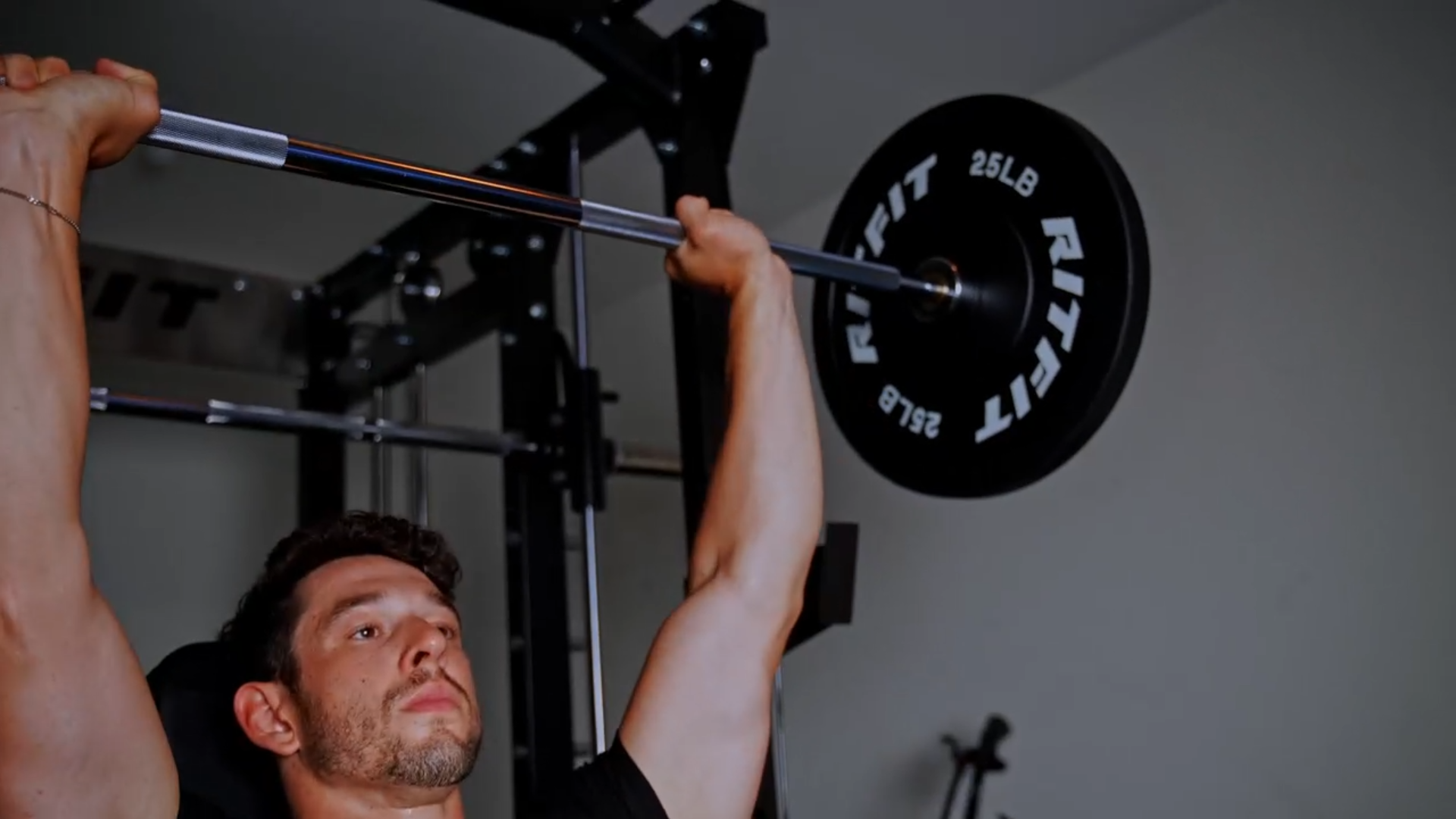
If you’re shopping for a short barbell for small spaces, don’t just look at the total length. A few other measurements will tell you whether the bar will actually work in your gym.
- Measure Your Rack First
Before buying anything, measure the distance between the rack’s uprights or J-hooks where the bar will sit. Then compare that measurement with the bar’s rackable section.
A bar can be six feet long and still not fit your rack properly.
- Check the Overall Length
This is where shorter bars have a real advantage. A 5- or 6-foot bar leaves less steel sticking out from either side of the rack, which can make a noticeable difference in a tight room.
If you’re working with a narrow workout area, a 6-foot rackable barbell can be a useful middle ground between a full-size bar and a much shorter accessory bar.
- Look at the Sleeve Length
Shorter bars usually give up some loading space. Check how long the sleeves are and think about the plates you already own.
If you use thick bumper plates, you may run out of room much sooner than someone using thinner iron plates.
- Check the Bar Weight
Don’t assume every short Olympic bar weighs 20 kg. The bars in this comparison range from lightweight options to the 15 kg Titan.
That matters when you’re tracking your lifts, especially if you’re used to a standard 45-pound bar.
- Decide Whether You Actually Need a Rackable Bar
This is an easy one to overlook.
If you’re doing squats and rack-based bench presses, you need a properly rackable bar. But if you’re mainly doing curls, rows, hip thrusts, or floor-based exercises, a much shorter bar can work.
That’s why the LIONSCOOL and Yaheetech options can make sense for some small-space setups even though they aren’t substitutes for a rackable bar.
- Think About Your Actual Training
For most home gyms, I’d prioritize rack compatibility first, then sleeve length and overall size. A compact barbell for home gym use is only useful if it still handles the exercises you want to do.
If you mainly want squats and bench presses, choose accordingly. If you just want a small bar for accessory work, there’s no reason to buy a longer rackable bar simply because it looks more like a traditional Olympic bar.
Mistakes to Avoid
- Assuming the Shortest Bar Is the Best
A 4-foot bar might save the most space, but that doesn’t mean it will work with your rack. Always look at the rackable section, not just the overall length.
- Measuring the Rack’s Outside Width
This is an easy mistake to make. Measure the actual distance where the bar sits on the J-hooks. That’s the number that matters.
- Buying a Non-Rackable Bar for Rack Exercises
Some very short bars are made for curls, rows, and other accessory work. They’re great for a short barbell for small spaces, but that doesn’t make them suitable for squats or bench presses from a rack.
- Forgetting About Plate Thickness
Short sleeves can fill up surprisingly quickly. Before buying, check the sleeve length and think about how thick your plates are.
- Assuming Every 6-Foot Bar Is Rackable
A 6-foot rackable barbell can be a great compromise for a small home gym, but don’t buy based on length alone. Check the actual rackable dimensions of the specific model and make sure they match your rack.
FAQs
What is the best rackable short barbell for home gym use?
It depends on your rack and how much weight you plan to use. For a small home gym, focus first on the bar’s rackable length, then look at overall length, sleeve space, and capacity.
Is a 6-foot rackable barbell long enough for squats?
It can be. A 6-foot bar can work well with a home rack, but you need to check the distance between the sleeves and compare it with your rack’s usable width before buying.
Can I use a 4-foot barbell on a power rack?
Usually, you shouldn’t assume so. Some 4-foot bars are designed mainly for curls, rows, and other accessory work rather than sitting across a power rack.
What is the best short barbell for small spaces?
Look for a bar that’s short enough to fit your room without sacrificing the rackability or sleeve space you actually need. If you don’t use a rack, an even shorter accessory bar may make more sense.
Can I use Olympic plates on a short barbell?
Yes, as long as the bar has standard 2-inch Olympic sleeves. Just remember that shorter bars generally have less sleeve space, so you may not be able to load as many plates.
How much weight can a short barbell hold?
It varies quite a bit. The bars in this comparison range up to a stated 500-pound capacity, but you should always check the manufacturer’s rating for the exact length and model you’re buying.
Do I need a compact barbell for a home gym?
Not necessarily. A compact barbell for home gym use is most useful when you’re genuinely short on space. If you have plenty of room, a standard 7-foot bar may give you more loading space and fewer compatibility concerns.
Conclusion
If I were setting up a home gym where space was tight, I wouldn’t automatically go for the shortest bar I could find. I’d first measure my rack, then look for the shortest bar that still gives me enough room for the exercises I actually plan to do.
For most people, that makes the RITFIT or Titan the more practical choices, while the LIONSCOOL is worth considering if rack work isn’t a priority.
The main thing I’d check before ordering the best rackable short barbell for home gym use is the rackable section, not just the advertised bar length.
A few minutes with a tape measure can save you from ending up with a bar that doesn’t fit your rack!