A low ceiling can make choosing a cable machine surprisingly tricky. A machine that looks compact on paper may still leave you fighting for headroom during pulldowns or standing exercises.
That’s why I’d look beyond the overall size and pay attention to the pulley height, your own height, and the actual ceiling clearance.
In this guide to the best cable machine for low ceiling home gym, I’ll compare five options that can work in tighter rooms, including a low ceiling cable machine designed to make better use of limited vertical space.
Best Cable Machine For Low-Ceiling Home Gym: Comparison Table
If your ceiling is low, height should be one of the first things you check. I’d also look at the footprint and how the pulley system adjusts, since a shorter machine isn’t always the easiest one to use.
Product
Best For
Height
Footprint
Pulley Adjustment
Mounting
VEVOR 3-in-1 Cable Machine
Best overall
79.3″
30.5″ D × 29.9″ W
18 positions
Wall mount
Goimu WM1
Tight spaces
78.74″
28.11″ D × 24.8″ W
17 positions
Wall mount
YOLEO 2-in-1 Cable Machine
Extra-low ceilings
73.3″
81.5″ D × 23.3″ W
13 positions
Freestanding
Mikolo LAT Pulldown Machine
Basic lat/row training
Approx. 81″
Approx. 55″ D × 24″ W
Adjustable seat
Freestanding
Eonfit E1 2.0
More cable exercise variety
79–80″
80″ D × 55″ W × 36″ D
33 positions
Wall/free-standing
The YOLEO stands out for its 73.3-inch height, while the Goimu and VEVOR stay just under 80 inches. That difference can matter a lot in an older basement.
Just remember that the machine’s listed height isn’t the same thing as usable headroom; you still need some breathing room above it!
1. VEVOR 3-in-1 Cable Machine – Best Overall

For someone who wants a versatile cable machine that can fit under a relatively low ceiling without taking up much floor space.
- Height: 79.3 inches
- Dimensions: 30.5″D × 29.9″W × 79.3″H
- Weight: 70.6 lb
- Weight capacity: Up to 500 lb
- Pulley positions: 18
- Cable ratios: 1:1 and 2:1
- Mounting: Wall-mounted
The 79.3-inch height is the main reason this machine makes sense here. If you’re working with an 8-foot ceiling, it takes up much less vertical space than many full-size cable machines.
I also like the wall-mounted design for a basement or smaller home gym. You aren’t giving up a big chunk of floor space just to get a high and low pulley system. The 18 height positions also give you some flexibility without needing a taller frame.
That said, don’t treat 79.3 inches as a recommendation for a 79.3-inch ceiling. You still need clearance above the machine and enough room to actually perform your exercises comfortably.
What We Like
- Relatively short 79.3-inch frame
- Wall-mounted design saves floor space
- High and low pulley system
- 1:1 and 2:1 cable ratios
- 500-lb stated capacity
What Could Be Better
- Very little margin under an 80-inch ceiling
- Requires a suitable wall for mounting
- You’ll need to account for ceiling obstructions and installation clearance
I’d look at the VEVOR first if you want a best cable machine for low ceiling home gym setup that balances height, versatility, and floor space. Just measure your ceiling carefully before ordering, especially if you’re working with an older basement or an uneven floor.
2. Goimu WM1 Wall Mount Cable Station – Best for Tight Spaces

A good fit for someone dealing with both a low ceiling and limited floor space.
- Height: 78.74 inches
- Dimensions: 28.11″D × 24.8″W × 78.74″H
- Footprint: About 3.12 sq. ft.
- Pulley positions: 17
- Cable ratios: 1:1 and 2:1
- Mounting: Wall-mounted
The Goimu WM1 is one of the shorter options here at 78.74 inches. More importantly, it doesn’t need much floor space either. That’s a useful combination if you’re trying to squeeze a cable machine into a basement corner or a smaller home gym.
The 17 pulley positions give you plenty of adjustment for different exercises without making the frame taller. You can move the pulleys for movements like presses, rows, flyes, and pulldowns while keeping the overall machine relatively compact.
One thing I’d pay close attention to is the wall itself. This is a wall-mounted machine, so having enough vertical clearance doesn’t help if the wall isn’t suitable for the installation.
What We Like
- Short 78.74-inch height
- Very small footprint
- 17 pulley positions
- Wall-mounted design
- 1:1 and 2:1 cable ratios
What Could Be Better
- Requires proper wall mounting
- Lower stated capacity than some machines here
- Less floor-standing flexibility
The Goimu WM1 makes a lot of sense if you’re looking for a low ceiling cable machine that also keeps floor space to a minimum. It’s especially worth considering for a compact basement gym where both dimensions are working against you.
3. YOLEO 2-in-1 Cable Machine – Best for Extra-Low Ceilings

For someone with a particularly low basement ceiling who still wants both cable exercises and rowing in one machine.
- Height: 73.3 inches
- Dimensions: 81.5″D × 23.3″W × 73.3″H
- Weight: 40 kg
- Weight capacity: Up to 450 lb
- Upright positions: 13
- Seat positions: 9
- Rowing rail: 49.6 inches
The 73.3-inch height is what really sets the YOLEO apart. That’s several inches shorter than the other machines on this list, which can make a big difference if your basement ceiling is especially low.
You still get high and low pulley exercises, but the machine also doubles as a rowing machine. The adjustable upright and seat positions give you some flexibility in finding a comfortable setup without needing a taller frame.
The tradeoff is floor space. At 81.5 inches deep, this is a long machine, so you’ll want to measure the room in both directions before buying.
What We Like
- Shortest machine in this comparison
- High and low pulley training
- Built-in rowing function
- 13 upright and 9 seat positions
- 450-lb stated capacity
What Could Be Better
- Takes up considerably more floor space
- Long rowing rail needs clear space behind it
- Not the best choice if both ceiling and floor space are severely limited
If vertical clearance is your biggest headache, the YOLEO is one of the first machines I’d consider. Its 73.3-inch height gives you much more breathing room than most options, although you’ll need to be comfortable giving up some floor space.
You May Like – Best Home Gym Setup Under $500
4. Mikolo LAT Pulldown Machine – Best for Simple Cable Training

Someone who mainly wants lat pulldowns, seated rows, and basic cable exercises without a larger functional trainer.
- Height: Approximately 81 inches
- Width: Approximately 24 inches
- Depth: Approximately 55 inches
- Maximum tension/load: 450 lb
- Pulley system: High and low
- Seat: 3 adjustable height settings
- Weight: About 71 lb
The Mikolo takes a simpler approach than the larger cable crossover machines. You get a high and low pulley system in a relatively narrow frame, which can be useful when your room isn’t very wide.
There is one catch, though. At around 81 inches tall, I wouldn’t put this near the top of the list for a truly low basement ceiling. If you have an 8-foot ceiling, that leaves only about 15 inches of clearance before accounting for the machine’s actual installation and your movement.
So while this is a short cable machine compared with many larger functional trainers, its height still needs to be checked carefully against your ceiling.
What We Like
- Simple high and low pulley setup
- Relatively narrow design
- Adjustable seat
- Leg hold-down helps with pulldowns
- 450-lb stated capacity
What Could Be Better
- Taller than the other low-clearance options here
- Exact dimensions depend on the specific Mikolo model
- Not ideal for very low ceilings
I’d consider the Mikolo if your ceiling is low but not exceptionally low and you mainly want straightforward lat and cable exercises. For a genuinely tight basement, I’d look at the shorter machines first.
5. Eonfit E1 2.0 Cable Station – Best for Adjustability

For someone who wants the versatility of a functional trainer but still needs to keep the machine around the 80-inch height range.
- Height: About 79–80 inches
- Dimensions: 80″L × 55″W × 36″D
- Machine weight: About 150–175 lb, depending on the listed version
- Pulley positions: 33
- Cable ratio: 2:1
- Pulley capacity: Up to 800 lb
- Mounting: Wall-mounted or freestanding
The Eonfit is interesting because it gives you much more adjustability without going to the height of a full-size functional trainer. With 33 height positions and dual 3D adjustable arms, you can set the cables for everything from pulldowns and rows to flyes, curls, and triceps work.
It’s also flexible about installation. You can mount it to the wall or use it as a freestanding setup, which gives you more options when planning a basement gym.
The downside is its width. At 55 inches wide, it takes up considerably more room than the smaller wall-mounted options. So this is more of a compact cable machine for low ceiling use in terms of height, not necessarily floor space.
What We Like
- Around 80 inches tall
- 33 height adjustment positions
- Dual 3D adjustable arms
- Wall-mounted or freestanding
- Wide range of cable exercises
What Could Be Better
- Much wider than the Goimu or VEVOR
- Very little clearance under an 80-inch ceiling
- Heavier and more involved to set up
The Eonfit makes the most sense if you don’t want a low ceiling to force you into a basic lat tower. It gives you a much wider range of cable exercises, but you’ll need enough floor space to take advantage of it.
Also Read: 5 Best Glute Machine for Home Gym
How to Choose a Cable Machine for a Low Ceiling
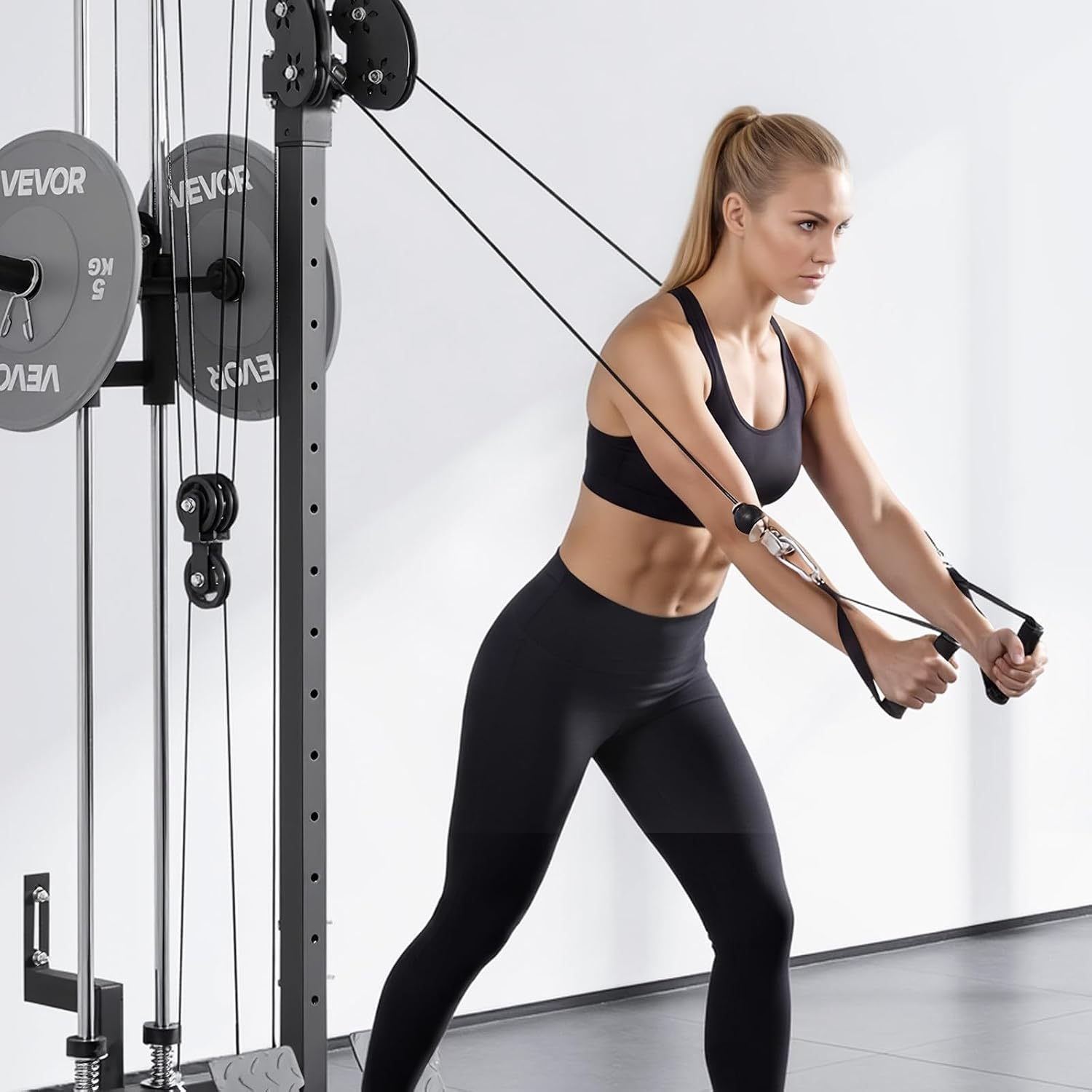
Once you get past the basic dimensions, there are a few things I’d check before buying. A machine can technically fit under your ceiling and still be awkward to use.
Measure the Actual Ceiling Height
Measure from the finished floor to the lowest point of the ceiling. In a basement, that might be a beam, pipe, duct, or light fixture rather than the main ceiling.
I wouldn’t buy a machine simply because its listed height matches your ceiling. You want some margin.
Consider Your Own Height
Your height matters almost as much as the machine’s height. A shorter user may have plenty of room for pulldowns, while a taller user could feel cramped.
Think about where your head, shoulders, and hands will be during the exercises you plan to do most often.
Check the Highest Pulley Position
Don’t only look at the machine’s overall height. Check how high the pulley can actually be positioned and whether that gives you enough room for your intended movements. This is especially important for:
- Lat pulldowns
- Triceps exercises
- High cable work
- Standing movements
Think About Floor Space Too
A shorter machine isn’t automatically a compact machine. The YOLEO, for example, is only 73.3 inches tall but is over 81 inches deep.
That’s why I’d measure the full area you need to use the machine, not just the space it occupies when sitting still.
Consider Your Basement Walls
If you’re looking at a wall-mounted model, check what you’re actually mounting into. Concrete, masonry, and wood framing all require different approaches.
For a cable machine for basement use, I’d also check for moisture, uneven flooring, exposed pipes, and anything else that could interfere with installation or movement.
Leave Some Breathing Room
This is probably the biggest one. If your ceiling is 80 inches and the machine is 79.5 inches tall, that’s technically a fit, but it’s not a setup I’d feel comfortable with.
A little extra clearance makes installation easier and gives you more room to move around the machine.
Mistakes to Avoid
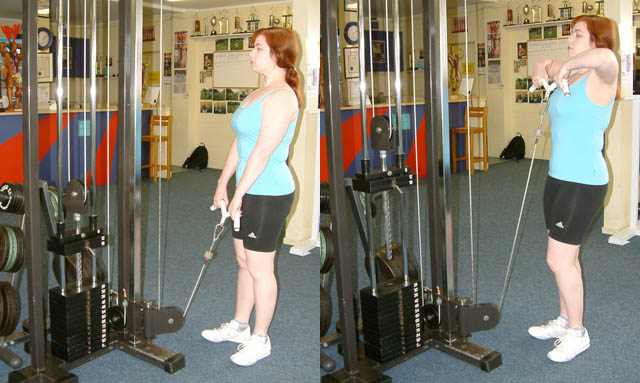
A low ceiling doesn’t leave much room for guesswork. These are the mistakes I’d try hardest to avoid.
- Only Checking the Machine Height
If your ceiling is 80 inches and the machine is 79 inches, that doesn’t mean you’ve got a comfortable setup. You still need clearance for installation and movement.
- Forgetting Your Own Height
The machine might fit perfectly while you still feel cramped during pulldowns or standing cable exercises. Think about where your head and arms will be at the highest point of each movement.
- Ignoring Beams, Pipes, and Ducts
Basements often have things hanging below the main ceiling. Measure the lowest obstruction, not just the ceiling height in the middle of the room.
- Choosing the Shortest Machine Without Checking the Footprint
A short frame can still take up a lot of floor space. The YOLEO is a good example. It saves vertical space but has a long 81.5-inch footprint.
- Assuming Wall Mounting Will Work Anywhere
Wall-mounted machines can save valuable floor space, but you need a suitable wall and enough room for proper installation. Check the manufacturer’s mounting requirements before buying.
Measure the room first, then shop for the machine. It can save you from an expensive piece of equipment that technically fits but doesn’t work well in your space.
FAQs
What is the best cable machine for a low ceiling?
Look for a machine with a genuinely low frame, adjustable pulley positions, and enough clearance for your own height. The overall machine height is only part of the equation.
Can I use a cable machine in a basement with a 7-foot ceiling?
Yes, but your options become more limited. A machine around 73 inches tall gives you considerably more room than one around 79-81 inches, but you still need to consider how much space you need to perform each exercise comfortably.
How much ceiling clearance do I need above a cable machine?
I’d leave some extra room rather than buying a machine that nearly touches the ceiling. You’ll need space for installation, ceiling irregularities, and your own movement.
Is a wall-mounted cable machine better for a low ceiling?
Not necessarily, but wall-mounted models can make better use of limited floor space. They’re particularly useful when you need to keep the machine short and close to the wall.
What should I look for in a low ceiling cable machine?
Start with the machine’s actual height. Then check the highest pulley position, your own height, required exercise clearance, footprint, and any beams or pipes above the installation area.
Is the shortest cable machine always the best choice?
No. A shorter machine may have a much larger footprint or fewer exercise options. The YOLEO, for example, saves vertical space but takes up considerably more floor space.
Wrapping Up
If I were setting up a cable machine in a low-ceiling basement, I’d start by measuring the room before looking at anything else.
For most setups, the VEVOR would be my first place to look because it keeps the height and footprint fairly reasonable without giving up the high-and-low pulley setup.
If the ceiling is really low, I’d look closely at the shorter YOLEO. And if floor space is tight too, the Goimu WM1 is worth considering.
The one thing I wouldn’t skip is measuring the actual clearance above the machine. Check for beams, pipes, lights, and anything else hanging down. A few inches can make a big difference when you’re actually using the machine!